Baby Hates the Car Seat? Why Babies Cry in the Car and What to Try
The car seat clicks, and the crying starts. Some babies fall asleep before the end of the street. Others protest every ride for months, and their parents start planning the week around avoiding the car.
A baby who cries in the car seat is usually telling you something specific and fixable. Here's a short list to work through before the next drive, and what to do when the crying starts while you're at the wheel.
The Short Answer
- Check comfort first: strap fit, clothing, temperature and sun in the eyes cause a lot of car seat crying, and each takes a minute to rule out.
- Time the drive. A fed, changed baby who is due a nap rides better than a hungry one who just woke up.
- Give them something to look at. A rear-facing baby faces a seat back. A baby car mirror shows them a face, and shows you theirs.
- Never loosen the harness or take a baby out of the seat while the car is moving. If you need to help, pull over somewhere safe first.
- Crying on every ride, or crying that sounds like pain, is worth a call to your pediatrician.
Six Things to Check Before the Next Drive
Work through these in order. The first three are about the seat and the car; the last three are about your baby.
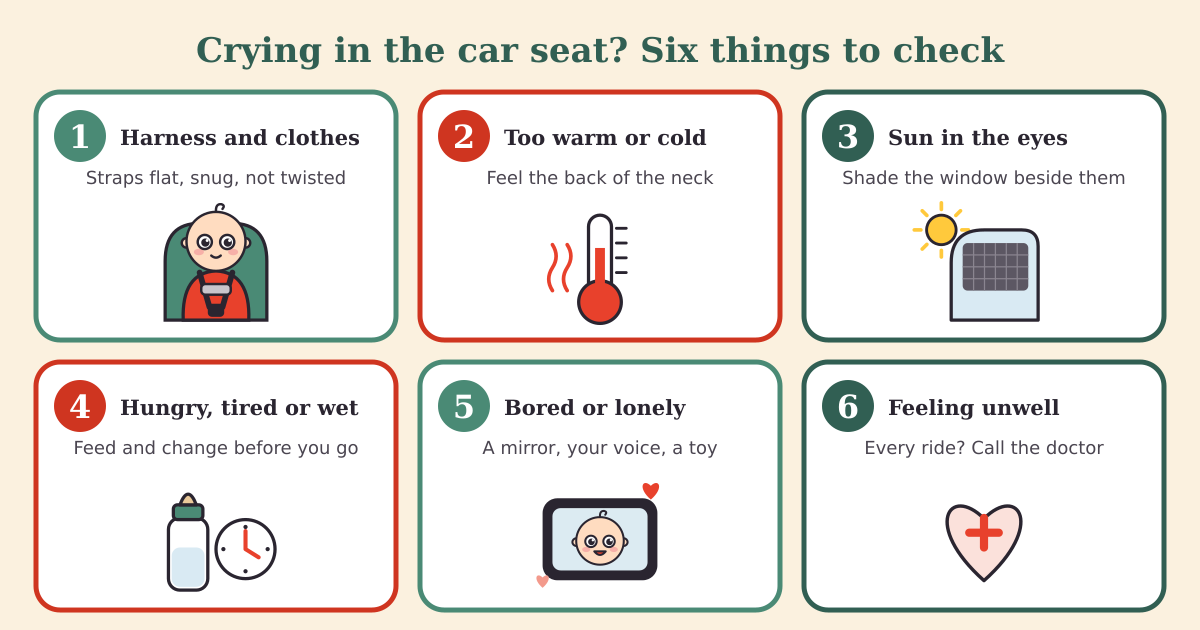
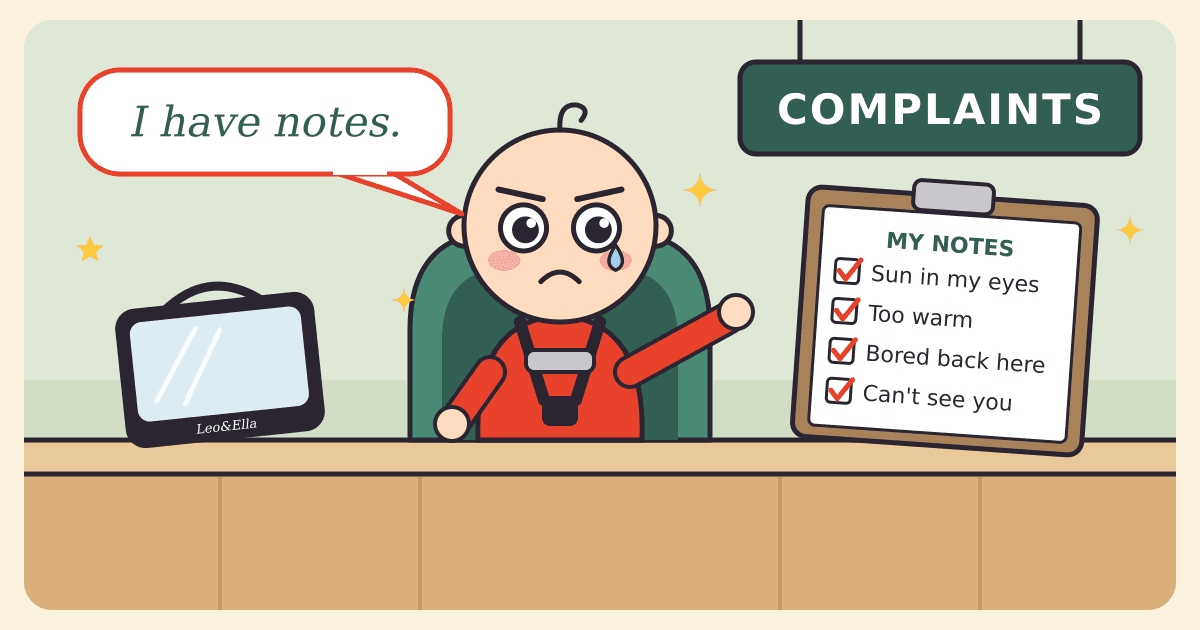
Six common reasons a baby cries in the car seat. Most take a minute to rule out.
1. Harness and Clothes
A strap that's twisted, a buckle sitting on bare skin or a bunched-up outfit under the harness is uncomfortable in a way a baby can only report by crying. Run your fingers under the straps after you buckle: they should lie flat, and you shouldn't be able to pinch a fold of strap at the collarbone.
Babies also grow out of settings fast. For a rear-facing seat the harness straps come from at or below the shoulders and the chest clip sits at armpit level; your seat's manual shows when to move the straps up a slot or take out the newborn insert (NHTSA). Check the recline too. The seat's angle indicator should be in the range for your baby's age.
One thing not to do: add cushions, strap covers or head supports that didn't come with the seat. The American Academy of Pediatrics advises against using extra products in a car seat unless they came with it or its maker approves them (HealthyChildren.org).
2. Too Warm or Too Cold
A padded car seat holds warmth around a baby, and the back seat can be warmer or cooler than the front. Feel the back of their neck: sweaty means too warm. Dress them in thin layers you can peel off, and take the blanket away once the car has warmed up. In cold weather the same rule works the other way; our guide to winter car rides with a baby covers coats and blankets.
3. Sun in the Eyes
A rear-facing baby can't turn away from low sun coming through the side window, and can't tell you about it. If the crying starts on the same stretch of road or at the same time of day, look at where the sun is.
A static-cling shade on the window beside the car seat is the usual fix. Leo&Ella's car window sunshades are 19" x 12" mesh shades that press onto the glass with no assembly and block sun glare, heat and most UV rays. More on fitting one in our guide to keeping a baby shaded in the back seat.
4. Hungry, Tired or Wet
The same baby can love the car at 10 a.m. and hate it at 5 p.m. Before you blame the seat, look at the timing:
- Feed and change first. Then give a few minutes for a burp before you buckle.
- Leave when a nap is due. Many babies settle with the hum of the road once they're sleepy; an overtired baby often won't.
- Break up long drives. Car seat makers generally advise taking a baby out for a stretch about every two hours. Our baby road trip planner builds stops around feeds and naps.
5. Bored or Lonely
This one is easy to miss from the front seat. Riding rear-facing, your baby looks at the back of a seat, and you're a voice from somewhere behind them. Drag the slider to see their view with and without a mirror on the headrest.
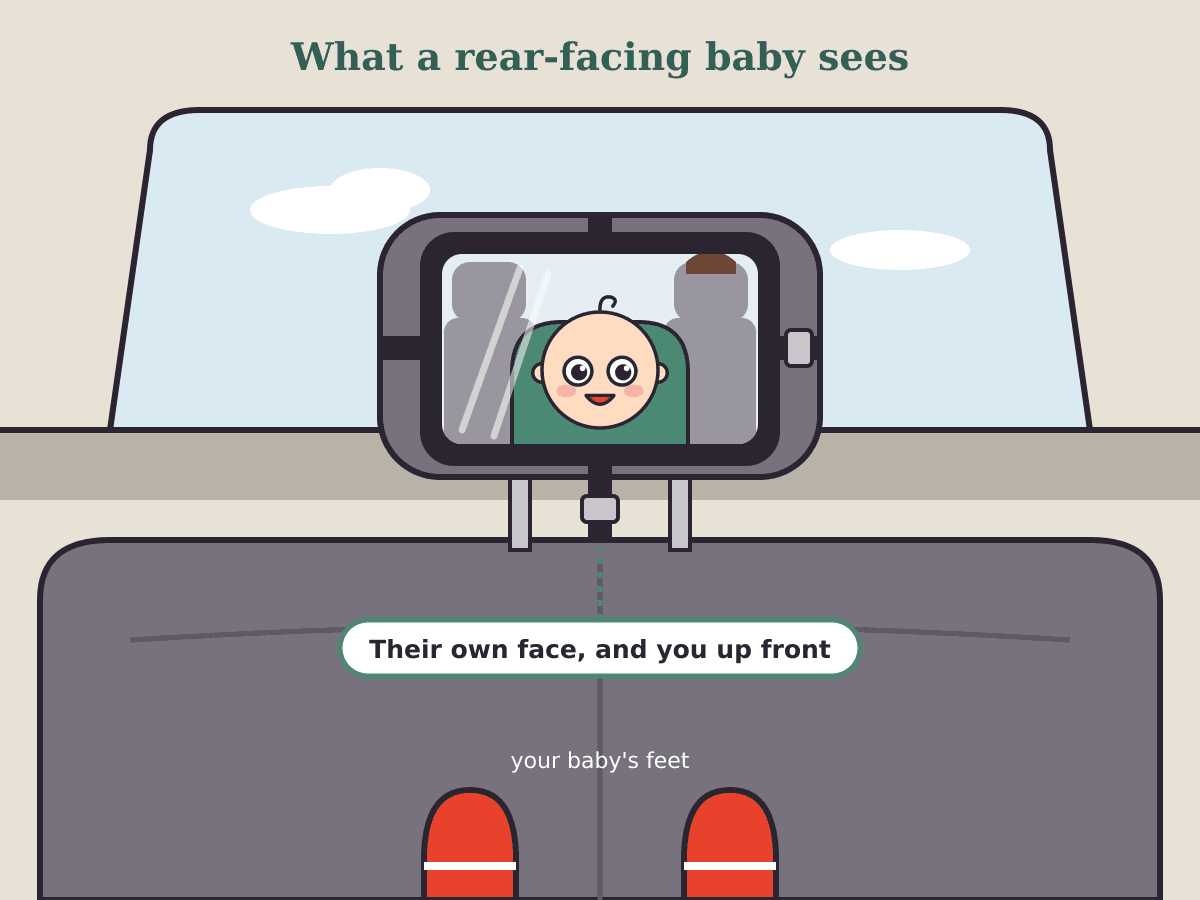
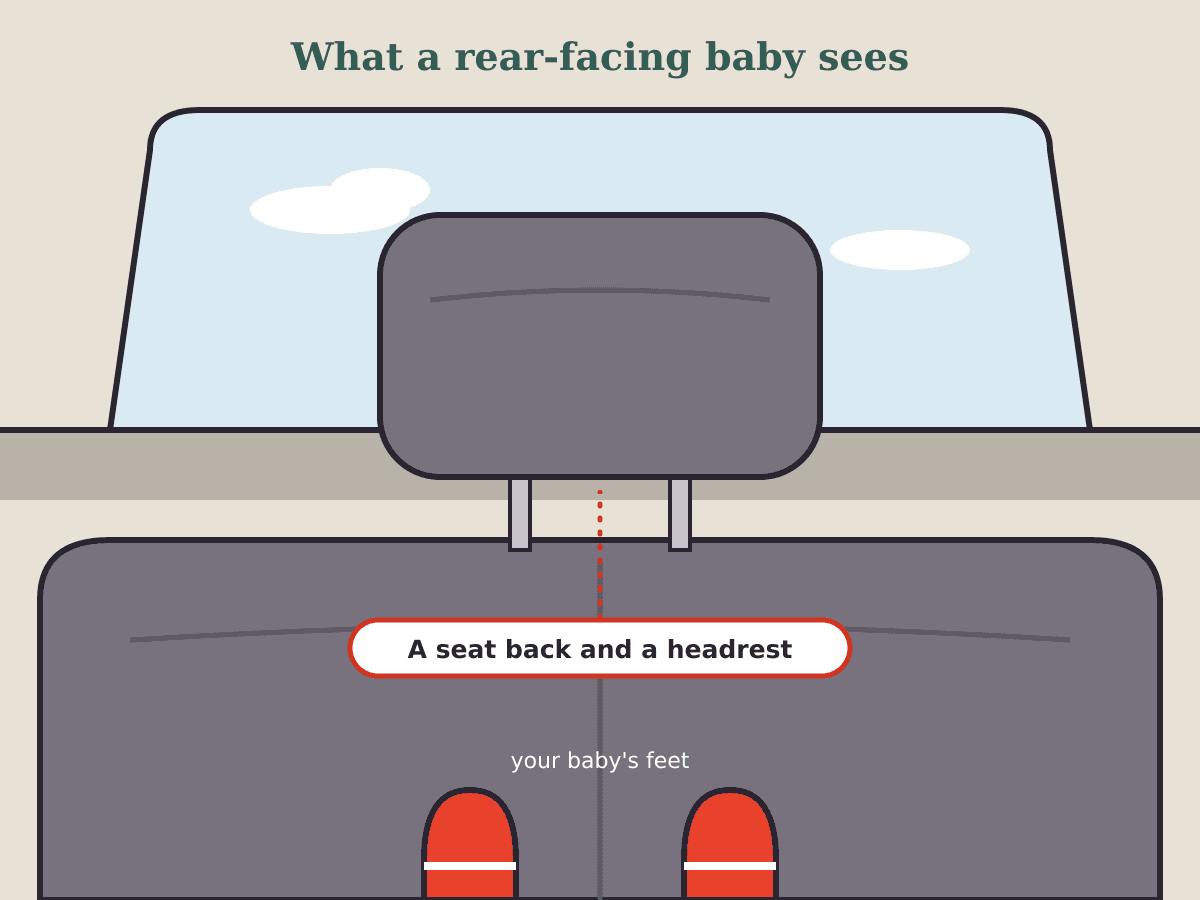
A baby car mirror is there so you can see your baby, but it faces them, so they get something to look at too: their own face, and the front of the car behind it. That won't settle every baby, and a mirror isn't a toy. It does give a bored one something that moves and smiles back.
The mirror helps you as well. A glance in your rearview mirror tells you whether you're hearing a dropped pacifier, sun on the face or a baby who has already dozed off, so you know whether you need to stop.
The Large baby car mirror is an 11.5" x 7.5" convex, shatterproof mirror that straps to an adjustable headrest in under 30 seconds. For a Tesla or any one-piece fixed headrest, the Tesla & Fixed mirror slides on with an elastic loop in under 10 seconds.
Other things that help a bored baby:
- Your voice. Talk, sing or play the music that works at home.
- A soft toy they can hold. Keep hard or heavy toys out of the car seat.
- A passenger in the back seat on the drives when someone's available.
6. Feeling Unwell
If your baby cries on nearly every ride no matter what you change, arches their back in the seat, or the crying sounds like pain, tell your pediatrician. Things a doctor can check, such as reflux or an ear infection, can make sitting in the seat uncomfortable. In older babies and toddlers who turn pale or vomit, it may be motion sickness; see how to ease motion sickness in the car.
This guide is general information, not medical advice.
When the Crying Starts Mid-Drive
A crying baby is hard to listen to, and it pulls your attention off the road. Anything that takes your eyes off the road, your hands off the wheel or your mind off driving is a distraction (NHTSA). So the order is: drive first, then help.
Pull over before you help
Don't reach into the back seat, loosen the harness or take your baby out of the car seat while the car is moving, even for a moment. If a glance in the mirror or the sound of the crying says something is wrong, pull over somewhere safe, park, and then go to them.
- Glance, don't stare. A quick look at the baby mirror in your rearview mirror, the way you'd check traffic behind you.
- Use your voice. Talk or sing in a calm, steady tone.
- Stop if you need to. A parking lot or rest area, not the shoulder, unless it's an emergency.
- Reset. Check the list above, offer a feed or a cuddle, then buckle up again properly before you drive on.
Crying that carries on while your baby is fed, dry, comfortable and safely buckled is stressful, but it's safer than a loose harness or a distracted driver. Finish the drive.
Does It Get Better?
For most families, yes. Many babies grow out of it as they get older and can see more, hold a toy and stay awake without getting upset. Until then, short practice drives at a good time of day help more than long ones at a bad time.
One thing that won't fix it sooner is turning the seat around early. The AAP recommends keeping children rear-facing as long as possible, until they reach the highest weight or height their seat allows (HealthyChildren.org). Our car seat stage calculator shows which stage fits your child.
The Free Sunshade
Every Leo&Ella baby car mirror ordered on leoella.com includes a free car window sunshade 2-pack, one for each mirror in the order, while supplies last. It may ship separately from the mirror.
Keep Reading
- Best place to put a baby car mirror for a rear-facing seat
- Driving at night with a baby: how to see the back seat in the dark
- Shop all Leo&Ella mirrors
A baby who cries in the car is asking for something. Most of the time it's on this list, and once you've found it, the back seat gets a lot quieter.
Share this article
Found this helpful? Share it with other parents who might benefit.